Read
A member’s story
Exporting the Invisible: How an Aphantasic Artist Creates Animated Musical Scores
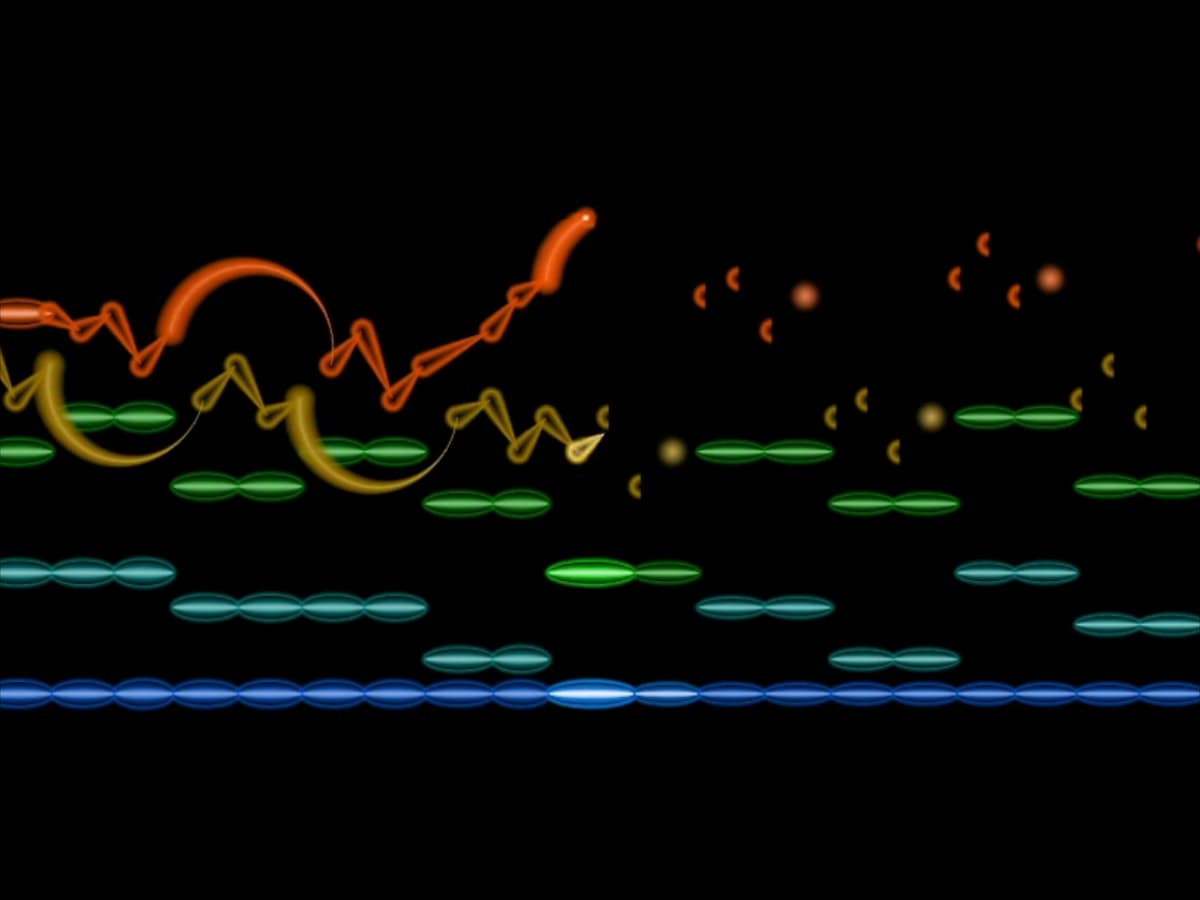
When viewers encounter Stephen Malinowski's Music Animation Machine —vibrant, cascading visual scores that dance in perfect synchronization with classical music—many assume the creator must have an exceptionally vivid visual imagination. The reality is precisely the opposite: Malinowski has aphantasia.
Aphantasia Network · March 2026

What the research says
Aphantasia and ADHD: You Asked, We Dug Into the Research
If you've ever felt like your aphantasia and ADHD are tangled together in ways you can't quite explain, you're not alone. Researchers are beginning to untangle that same thread — and what they're finding suggests the mind's eye depends on attention in ways we're only starting to understand.
Tom Ebeyer · October 2025

What the research says
Expanding Aphantasia Definition: Researchers Propose New Boundaries
Researchers expand aphantasia definition beyond "inability to visualize." This broader framework impacts how we understand and identify with the condition.
Tom Ebeyer · January 2025

What the research says
Aphantasia and Hyperphantasia: What We Know After a Decade of Research
Since 2015, "aphantasia" has reshaped our understanding of imagination, revealing that not everyone visualizes mentally. This discovery, along with "hyperphantasia," highlights the diverse nature of human imagination.
Tom Ebeyer · May 2024
Watch
All 5 videos


Research
2026
Aphantasia presenting as Cotard’s syndrome
Ravindren, R and Veedu · Discover Neuroscience
A 55-year-old woman had believed since age 29 that her mind had disappeared, a delusion of the kind seen in Cotard's syndrome. She reported no voluntary imagery in any sense, though she had visual dreams about once a month, and scans showed white matter damage in the frontal and parietal lobes on both sides. The authors suggest this damage disrupted her voluntary imagery and her ability to make sense of that loss, so she took it for losing her mind. It is a single case, and the report has no measure of her imagery before the illness.
2025
Autonomic, neurodevelopmental, and early adversity correlates of acquired aphantasia
Gao, Nagai and Silvanto · Neuropsychologia
People who lost their mental imagery reported more childhood trauma, anxiety, heart and breathing symptoms, and ADHD and autism traits than typical imagers. This suggests acquired aphantasia can follow emotional pathways as well as brain injury.
2025
MindEye: A VR Imagery Training System for Individuals with Acquired Visual Imagery Impairments and Mild Aphantasia
Wang and colleagues · Proceedings of the SIGGRAPH Asia 2025 Posters
A VR system using guided imagery and spatial tasks significantly improved imagery clarity and recall in people with imagery deficits. This suggests that leveraging preserved spatial cognition can help rebuild visual imagery pathways.
2025
Mapping the imageless mind: Towards a taxonomy of aphantasia
Bartolomeo · Neuropsychologia
In a short conceptual paper, the author proposes sorting aphantasia into at least three forms: neurological, psychogenic and congenital. He offers it as an initial taxonomy for research that has reached contradictory conclusions.
From the community
Amblyopia and aphantasia? Is there a link?
Is there a connection between amblyopia and the inability to visualize mental images? Share your experiences or insights!
kathy · · 3 replies
PTSD, TBI’s and Aphantasia
Could complex PTSD or traumatic brain injury lead to a loss of visual memory, or is it a capability I never had? Let's explore this together.
Morgan · · 3 replies