EventsTalk · Members only
Is Aphantasia Talked About as a Disorder?
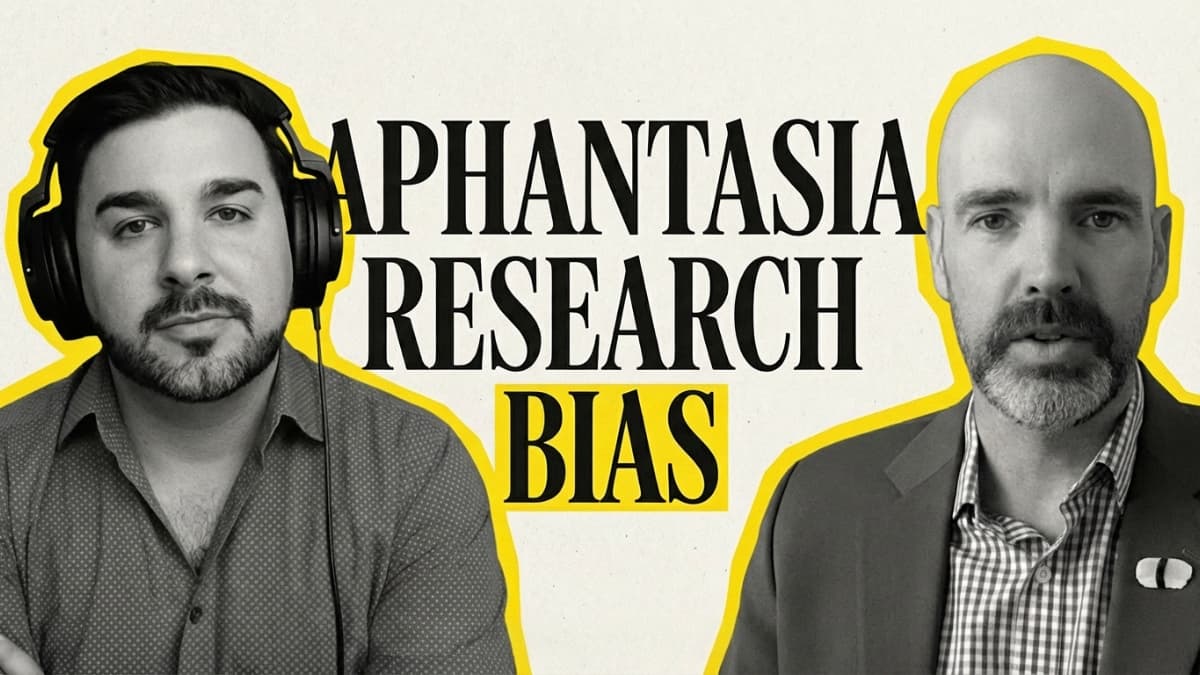
Dr Brett Scholz, Australian National University
What words have you seen used about aphantasia?
Aphantasia isn’t officially a mental health disorder or a cognitive disability, yet it is more and more often written about as something close to both. The words and comparisons used, the framing, tell readers what kind of thing aphantasia is.
So how do research papers, science news and social media frame people with aphantasia?
What the study found
Dr Brett Scholz and his co-author published the study as “Disordered, deficient, and dehumanised: How biomedical and cognitive approaches are limiting our understandings of aphantasia” in the International Mad Studies Journal in 2025. Mad Studies values what people with lived experience know, knowledge psychiatry has often ignored.
They read every publication on aphantasia in the Scopus research database, 87 documents, 69 of them studies, along with popular podcasts, TikTok and YouTube videos, Reddit threads and other web pages.
Three linked patterns ran through the language: people with aphantasia were cast as “disordered, deficient, and dehumanised”.
Even researchers who say aphantasia isn’t a disorder described it as abnormal, or as a system that must be malfunctioning.
Forming images was treated as “the ability”, and any benefits of aphantasia as unexpected.
Some sources tied imagery to being human, likened aphantasic minds to computers, or suggested that not picturing loved ones means loving them less.
They also found little research led by people with aphantasia, and researchers rarely said how their own imagery shaped their work.
The authors argue that medical and cognitive science views alone are limited in what they can show about aphantasia, and that the field is moving toward trying to control or fix it without evidence that this is needed. They call for research led by people with aphantasia, and for researchers to examine their own biases.
This is a close reading of language, not an experiment, and for social media it took popular items rather than everything. The authors also stress that they don’t see this framing as comparable to the oppression of Mad and disabled people.
What you’ll take away
- Three ways aphantasia gets framed, and how to spot them
- How “not a disorder” and the language of disorder can sit side by side
- What research led by people with aphantasia could add
About Brett
Dr Brett Scholz is an associate professor in the School of Medicine and Psychology at the Australian National University. A critical health psychologist, he studies how health care can be fairer, challenge who holds power, and be led by the people who use it.