At 85, an artist and curator discovers aphantasia and finally understands decades of struggle with art school instruction, finding that a tactile "add and subtract" method, first in assemblage, then photography and curating, was the workaround that quietly shaped an entire career.
Three years ago, I read my first article on aphantasia. It blew my mind. It explained so much about my past life. Now, at 85, I am finally at peace with this condition. I no longer see it as a deficiency. I see it as a challenge — one I survived and, in many ways, beat. Sixty-five years is a long time to go about wondering why it has been so difficult to be a visual artist and curator.
1962: The Beginning
In 1962, I began my four-year studies at a Hammersmith college of art, now known as Chelsea College of Art. The first year – the “foundation course”– was a killer.
That was the year I discovered I could not understand the professors’ instructions about
images. Talk of color, composition, spatial relationships — it went right over my head. Visualizing images was impossible. Even when an image was placed directly in front of
me, once it was removed, it disappeared from my mind’s eye. I never suspected I had a
problem. I simply began to believe I was incompetent.
Perspective classes were a nightmare. I could not see the vanishing point. Painting was no better. My classmates tried to help. They would say: “Close your eyes. Think of a rectangle, half pink and half green.” I convinced myself I could see it. I could not. “Now imagine a red circle in the middle.” Yes, of course. I lied. And this went on for four years. To say I was frustrated would be an understatement.
How It Affected My Work
Every painting, drawing, or project I created was completely different from the previous
one. There was no continuity. Each work was conceived without any idea of what it would become. I discussed this with my professors and they all said it was a good thing because it showed I was very creative!
Even while drawing from a model, I would look up — and by the time my eyes returned
to the paper, the image was gone. To this day, I can’t draw figuratively.
I don’t know how I survived, but I always came up with something. By the way, I was a
popular student because I always had exciting ideas that were alien to my English class
mates. Things they would never conceive of. Like creating the first and only exhibition of
faculty and student work at the college. Back in the early 60’s, my being an American
was a great curiosity to them .
Add and Subtract
In my fourth and final year, an exciting young British professor, newly arrived from States suggested I forget about painting and begin working with found objects. “Assemblage, he said, was the ticket”. And suddenly something shifted. Ropes, vintage table legs, cabinets, burnt canvas sacking, old dinnerware — these became my materials. I could move objects around physically until they felt right. For the first time, I felt at home in my process. I could actually see what was evolving in front of me. I was finally enjoying the creative process.
“Add. Subtract”. Adjust. I had found my mojo and in 1966, four years later, I passed my
exams and earned my degree. I had overcome the challenge — without really
understanding how.
Reinvention in New York
In 1968, after spending a couple of years in Denmark, I returned to the United States.
That’s when I realized space was an economic luxury in New York City. I had no room
for storing my artwork in our apartment. Assemblage required room — and I had none.
Back to zero.
Then I picked up a camera. Through the viewfinder, I could “add and subtract” again.
Frame. Crop. Move closer. Shift left or right, up or down. Eliminate distractions.
Compose by editing reality itself. Photography became a passion and a liberation.
Storage was no longer an issue. I went into the streets and created photo essays about
my working-class community. I started exhibiting my work in galleries and museums
and found modest but meaningful success.
Curating as Composition
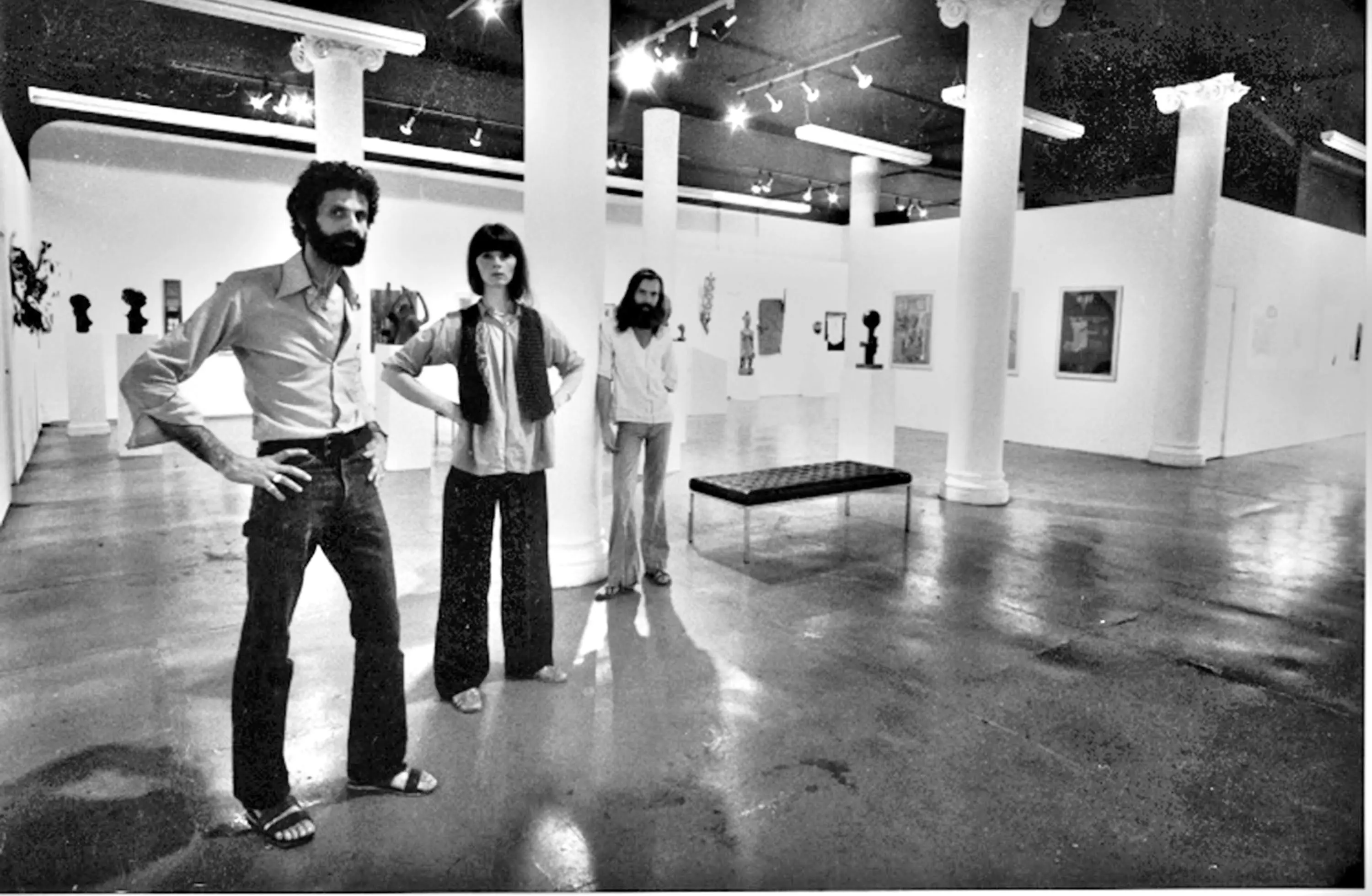
In 1970, I founded a contemporary arts organization for disenfranchised artists. Through
this work, I met the director of a The New York Cultural Center, a major museum. With
the support of his board and curators, I organized a significant photography exhibition,
“Dos Mundos: Worlds of the Puerto Ricans” featuring artists from New York City and
Puerto Rico.
The exhibition was a success. It received multiple positive reviews in The New York
Times and coverage on national television. It was a unique exhibition giving these
young photographers a voice that was missing in the NYC mainstream media.
Two years later, I walked into The Museum of the City of New York, met with its
director, John Veach Nobel and organized another successful exhibition. That was
when I realized I had a future in curating. And once again — it was about “adding and
subtracting”. Curating is assemblage.You see the works. You edit. You select. You
remove. You replace. You place one painting beside another until the room feels
balanced. “Add. Subtract”.
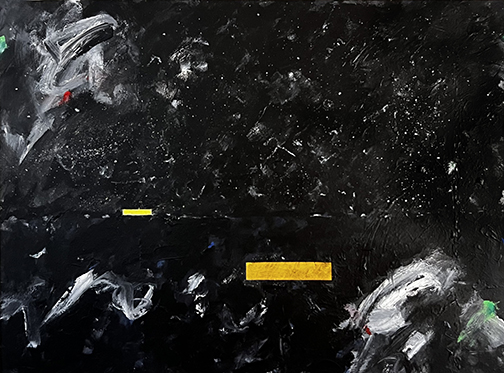
Even in painting, I do the same — add marks, remove marks, add again — until the
work feels right. It’s costly, frustrating and time consuming but it works for me. Are
there other way of solving the Aphantasia challenge? Yes, I’m sure there are, especially
if you are lucky enough to know you have the condition.
Success
I want to speak about success in spite of aphantasia. I do not see aphantasia as a disability. I see it as a challenge. Yes, it makes certain aspects of life more difficult. Without knowing what it is, one can feel incomplete, even incompetent. But once we understand it, we can work with it. I feel very successful.
Why I feel successful
In 1979, I received a National Endowment for the Arts Fellowship, competing against
thousands of applicants. The award, worth approximately $45,000 in today’s value,
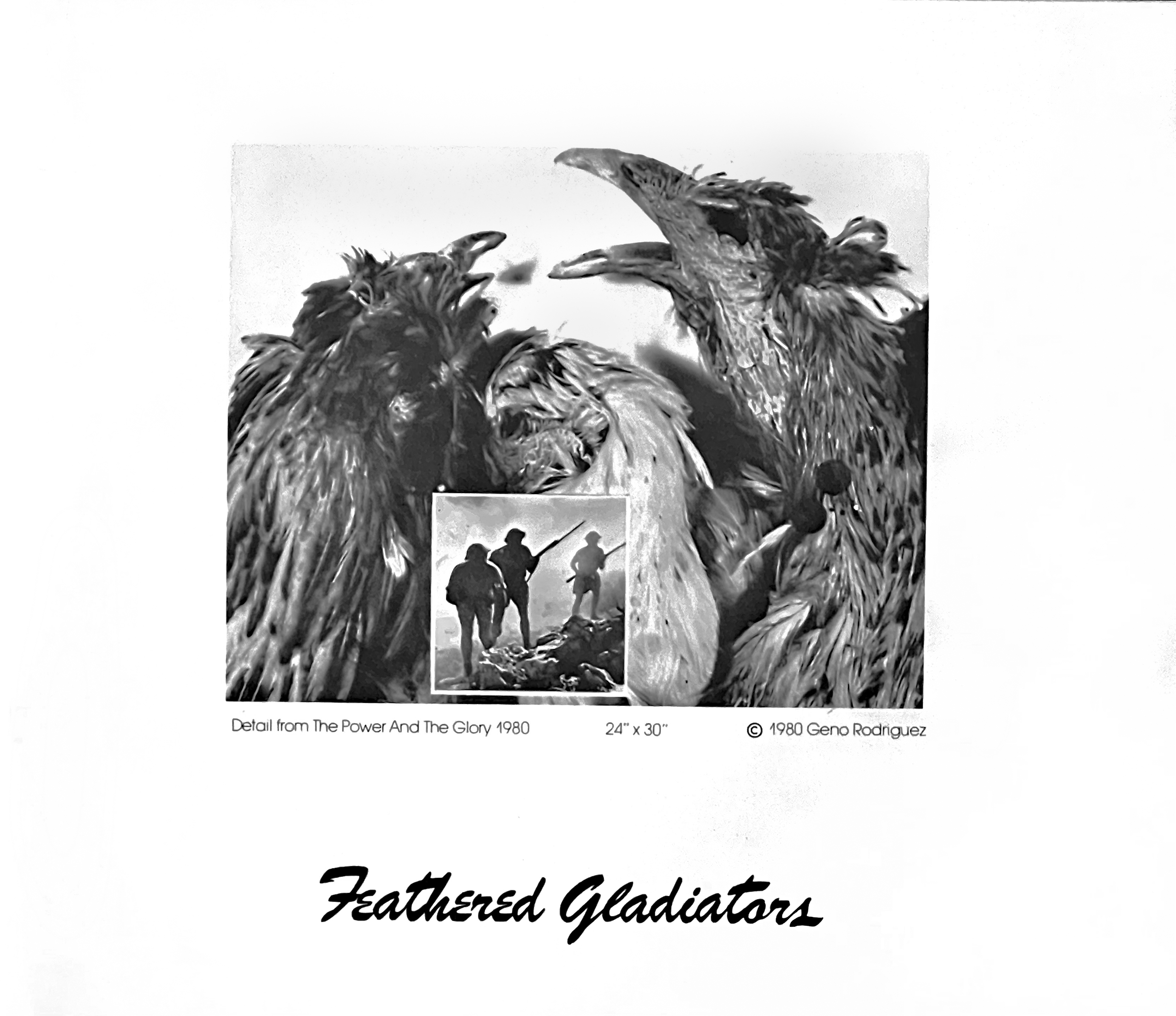
affirmed my work at a national level. My submission was a kind of photo assemblage
titled “Feathered Gladiators”. It was an excersie in the futility of war. I used cockfighting
and war images to make the point. (Image here) In 1985 I created another series, Gods
Saints and Local Heroes a series using spray painted bodies with objects attached to
them. These were exhibited At the International Center for Photograpy, N.Y.C.. These
images are really about adding and subtracting materials.
In 1993, I served on the Clinton/Gore Presidential Transition Team for the Arts and
Humanities. I was able to share art and cultural concerns with the incoming president’s
administration.
My artworks are held in museums collections Like The Metropolitan Museum of Art,
NYC and in private collections. I ran the recognized Alternative Museum for 26 years.
With over 400 exhibitions, panel discussions and world music concerts TAM was a
paradigm for existing institutions. Overcoming the challenge of aphantasia is possible.
We simply have to find our own alternative methods.
What Might Have Been
Had I known about this aphantasia in 1962, my college years might have been very
different. With guidance, I might have developed other strategies for “pre-visualizing”
work. However, perhaps I would not have discovered my personal method, “Add and
subtract”.
Perhaps my blindness of the mind’s eye forced me into a more physical, tactile, editorial
way of creating — one that ultimately defined my career. And at 85, I can say this: My
third eye may be blind. But my vision was never absent.
Discovery and Shock
Three years ago, I read my first article on aphantasia
1962: The Beginning
You’ve used your five free reads
Members read everything here, and put their own questions to the researchers at live talks.
Every talk recorded, with the questions
The members’ Discord, between talks
The Aphantasia Explained course, with Annual
Prices in US dollars, plus tax where it applies. 30 days to change your mind.
Geno Rodriguez (Eugene Rodriguez) is an artist, curator, and founder of The Alternative Museum (1975-2001), a groundbreaking New York space supporting politically engaged and underrepresented artists. His photography is held in major museums worldwide. A cultural activist and arts leader, he organized hundreds of exhibitions advancing diversity and inclusion.
Was this helpful?
Image-Free Insights
A short note from our founder, Tom Ebeyer, every other week, plus occasional news and invitations to take part in studies. Change what you get from any email.
After decades behind a camera, a photographer learns his mind has never produced images, a discovery that explains his compulsive archiving, his instinctive way of shooting, and his lifelong habit of trusting what's in front of him over what's in his head.
Alexander Kesselaar · September 2026
‘That’s Not How I Pictured It’ – Why Book‑to‑Film Adaptations So Often Disappoint
Film adaptations and illustrations can clash with our personal mental images. However, for those with aphantasia, who cannot mentally visualize, these on-screen adaptations offer a uniquely liberating way to experience stories.
Julia Thomas · July 2026
What’s It Like to Be an Artist With Aphantasia?
An artist shares his surprising discovery of living with aphantasia—the inability to visualise. Despite being unable to picture faces or landscapes, he reveals how this unique trait shapes his creative journey, forcing him to work instinctively, embrace experimentation, and use photography, digital tools, and video to help translate emotion into art.