The Girl Who Cannot Picture It
What happens when a horror writer creates a character who cannot form mental images? Author Len J. MacDonald shares how a chance encounter with aphantasia inspired Khloe Patterson, a teenage girl whose different way of experiencing the world became an integral part of his horror novel.
9 min read
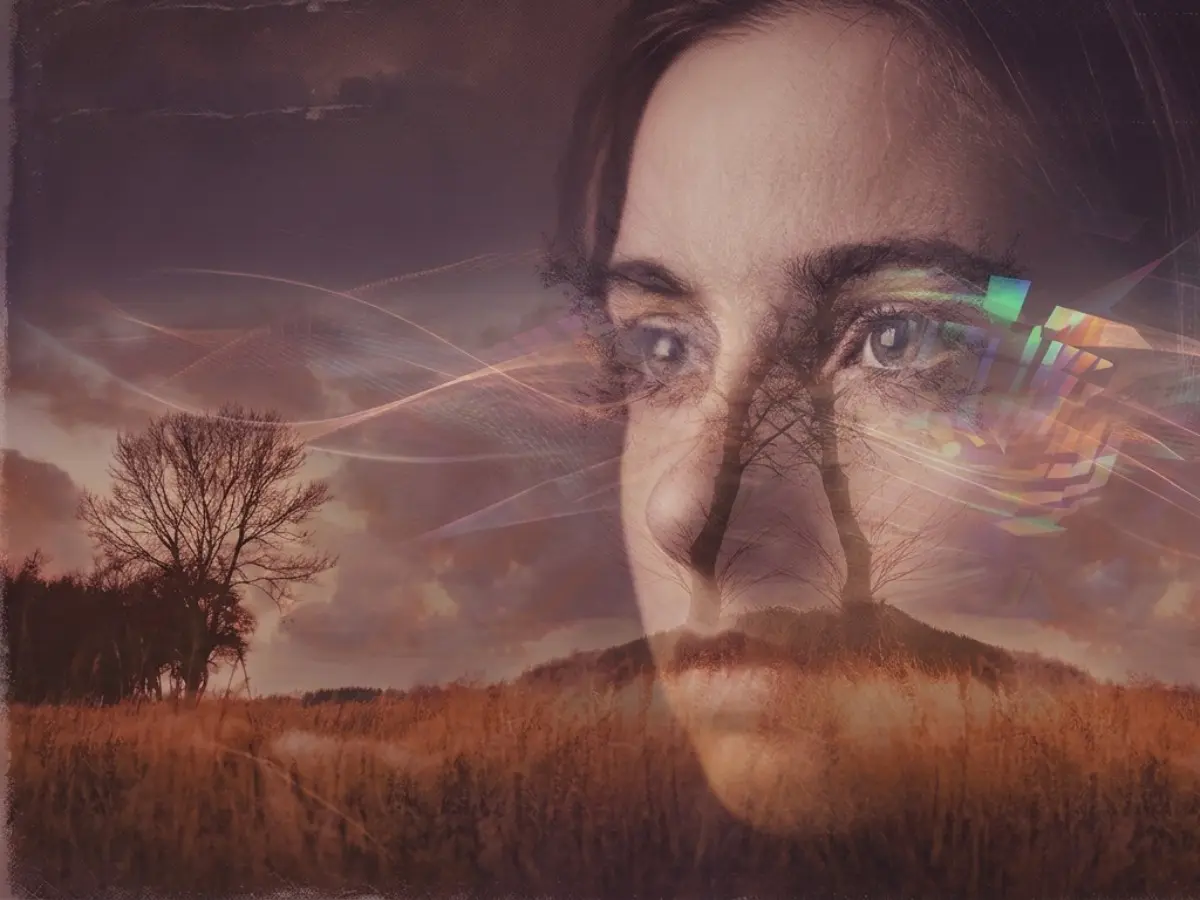
Sometime in the early 2020s, I happened across a podcast where the hosts were talking about people who couldn't form pictures in their minds. I had never heard of such a thing. If someone asked me to picture my childhood home, I could see it. If I thought about someone I knew, their face appeared in my mind. I had never given much thought to the fact that this happened automatically, much less considered that it didn't happen for everyone.
So I did what curious people do. I went online and started reading.
There wasn't a single fact that caused some great revelation. I simply found the whole idea fascinating: two people could look at the same thing, understand it equally well, remember it, talk about it, and yet have fundamentally different experiences inside their own minds.
Eventually I moved on.
The idea didn't.
It stayed somewhere in the back of my mind for several years, until my horror-writer brain finally found a use for it.
Turning a Horror Trope Around
Horror has been around for a very long time. That's one of the things I love about it, but it also means we've accumulated a lot of familiar machinery along the way.
One device I'd encountered repeatedly was the idea of a character having their own imagination used against them. It's an effective idea. Our minds are quite capable of frightening us without any outside assistance.
But eventually another question occurred to me:
What happens when you put someone who can't form mental images into that kind of story?
That question became Khloe Patterson.
Khloe actually existed in my imagination before Serling's Cross did. I originally intended her for a different horror project, but I knew from very early on that she would have this trait. When Serling's Cross began taking shape, I realized she belonged there instead.
I also knew what I didn't want her to become.
Coming-of-age stories, particularly those involving supernatural horror, have given us plenty of extraordinary young people with extraordinary abilities. I wanted to push against some of those familiar conventions in Serling's Cross. Khloe wasn't going to develop a superpower. Her aphantasia wasn't going to turn her into a superhero.
Her mind simply works differently.
And that difference was going to matter.
Meet Khloe
When readers first meet Khloe, she is drawing.
Allen Thomas, one of the novel's other main characters, wants to know why she is drawing the swings in the park.
Allen frowned. “So, why are you drawing the swings?”
Khloe’s pencil stopped again. She looked at him like she was deciding whether this was worth explaining. Then she said, “So I can remember what it looks like.”
Allen blinked. “Remem—what?”
Khloe explains that she has a condition, although nobody has a name for it. She doesn't make pictures in her head the way other people do.
If someone asks her to imagine a beach, she knows what a beach is. She can tell you what's on one. But there is no image.
Allen has trouble even understanding the idea. Mental imagery is so automatic for him that, until this conversation, he has never stopped to consider that it might not be automatic for everyone.
So he asks her what she has instead of pictures.
Her answer is:
“Facts. Sequences. How something happened. What someone said. What I did.”
That scene was important to me because I didn't want Khloe's aphantasia to be something I pulled out later when the plot suddenly needed it.
I wanted readers to understand from the moment they met her that Khloe experiences reality differently from Allen and the people around her.
More importantly, I wanted them to find Khloe interesting.
A Condition Without a Name
There was a complication.
I have a particular time period in mind for Serling's Cross, but I deliberately left many of the details vague. A reader might imagine these events happening in the 1970s, the 1980s, or somewhat later. I didn't want a date stamped across the story telling them otherwise.
That presented an interesting problem with Khloe.
During my research, I learned that the term aphantasia wasn't coined until 2015. Even in 2026, my word processor’s spellchecker still underlines aphantasia in red. Whatever exact year a reader imagines for Serling's Cross, Khloe wouldn't have that word available to her.
So I made a deliberate choice: aphantasia is never named in the story itself.
Khloe knows how her own mind works. She knows other people apparently make pictures in their heads and she doesn't. She can explain that difference to Allen. What she can't do is give him a convenient modern label for it.
And I think that ultimately served the character.
I couldn't simply tell the reader, Khloe has aphantasia, and move on. They had to meet her first and understand the difference through her.
Story First, Science Second
I did enough research to understand aphantasia and how it might affect Khloe's experience, but I never wanted Serling's Cross to turn into a scientific journal.
It's a horror novel.
Khloe is a character in that novel, not an educational pamphlet disguised as a sixteen-year-old girl.
That also meant I didn't want research making every decision for her.
Do people with aphantasia normally draw things so they can remember what they look like? I don't know. But I knew Khloe did.
I knew that before I read a word of research.
Khloe lives in a time before computers were in every home, before the information superhighway, online forums, and websites like https://aphantasia.com/. She doesn't have a name for the way her mind works, much less a community of people comparing notes about it.
But she's intelligent. She's lived with this her entire life. And somewhere along the way, she figured out that if she wanted to remember exactly what something looked like, she could draw it.
That wasn't a fact I discovered about aphantasia.
It was something I knew about Khloe.
That distinction mattered to me because her aphantasia isn't there merely to teach the reader that aphantasia exists. It affects how she remembers and how she experiences the world around her.
And because this is horror, it eventually affects something else.
The danger.
I'm going to be deliberately evasive about that.
I have a propensity for thinking about endings long before I've figured out everything that happens on the way to them. When I was developing Serling's Cross, I knew that putting Khloe into this particular kind of horror story would have significant consequences for where the story ultimately went.
Explaining those consequences here would ruin part of the fun.
What I can say is that I never wanted Khloe's aphantasia to function as an easy answer.
Good horror, at least for me, isn't about finding increasingly horrible things to do to a collection of characters.
First, I need to care about those characters.
Then I want to see the threat looming.
Sometimes I want the reader to recognize a danger that the characters themselves cannot yet see. That's when dread begins to work. If I've made you care about these people, you're no longer simply watching them become frightened.
You're scared for them.
And, hopefully, with them.
Khloe gave me an opportunity to play with that relationship between character, perception and reader expectation in a way I hadn't encountered before.
No, I Didn’t Make Her Up
There's a strange consequence to refusing to name aphantasia in a novel.
Some readers might reasonably assume I invented it.
After all, authors make things up for a living. Put an unusual cognitive trait into a supernatural horror novel and use it as part of the story, and it's not unreasonable for someone to think the author created the condition out of whole cloth for plot convenience.
That's why aphantasia finally appears after the story is over.
In the Author's Note, I explain that Khloe's way of thinking has a real-world name and that it isn't something I invented for Serling's Cross.
I deliberately kept that explanation until the end.
I wanted readers to meet Khloe before they met aphantasia.
Perhaps some of them will do what I did years ago. They'll finish the book, encounter the word for the first time, and go looking it up.
I'd be very happy if they did.
But there's another group of readers for whom I suspect that Author's Note will be unnecessary.
The Readers Who Already Know Her
I recently caught myself telling a friend that I already had the final scene of my next novel “pictured.” Only afterward did the irony occur to me. Here I was writing about Khloe, a character who cannot form mental images, while casually describing my own writing process in almost entirely visual terms.
My own writing process makes that difference particularly interesting to me. I've only recently realized just how visual that process is. Before I write a scene, I tend to play it out in my head almost like a movie. I see where the characters are, what they're doing and how the scene unfolds, and then I try to write down the movie I just watched.
I don't have aphantasia.
I can research it. I can read how people describe their experiences. I can try to understand it well enough to write Khloe authentically.
But I can never know precisely what another person experiences inside their own mind.
That's true beyond aphantasia, of course. One of the strange things about being human is that we walk around assuming we're experiencing roughly the same reality while having no direct access to anybody's experience except our own.
That's part of what I like about that early conversation between Allen and Khloe.
Khloe isn't amazed by what she's telling him. Allen is.
To her, this is simply how thinking works.
For a reader who visualizes, Khloe may provide the same little jolt she gives Allen: Wait. You don't see anything?
But I hope the experience is different for an aphantasic reader.
When Khloe says she draws something so she can remember what it looks like, perhaps they won't be perplexed.
When she explains how her memory works, perhaps they won't need the explanation.
When Allen struggles to comprehend something that seems perfectly ordinary to her, perhaps they'll already be right there beside her.
Because, in a way, they already know her.
I don't know whether I got every aspect of Khloe's experience right. I don't think I can ever know that with certainty.
But I hope I got her right enough that an aphantasic reader doesn't need to reach the Author's Note to understand her.
I hope they know Khloe the moment they meet her.
Meet Khloe in Serling’s Cross. Serling’s Cross is a supernatural horror novel by Len J. MacDonald. It follows Khloe Patterson, a sixteen-year-old who cannot form pictures in her mind. Khloe is not given a superpower, and her aphantasia is not an easy answer to the horror around her. Her mind simply works differently, and that difference matters.
If you have aphantasia, you may find that Khloe needs no explanation.
Sources
Topics
Written by
- LMLen MacDonald
I'm a horror author from Prince Edward Island, Canada. My debut novel, Serling's Cross, features a teenage girl with aphantasia. I first encountered the condition by chance while listening to a podcast, and the idea eventually found its way into one of my characters.
Was this helpful?
Image-Free Insights
A short note from our founder, Tom Ebeyer, every other week, plus occasional news and invitations to take part in studies. Change what you get from any email.