The Surprising Truth About Musicians Who Can’t Hear Music in Their Head
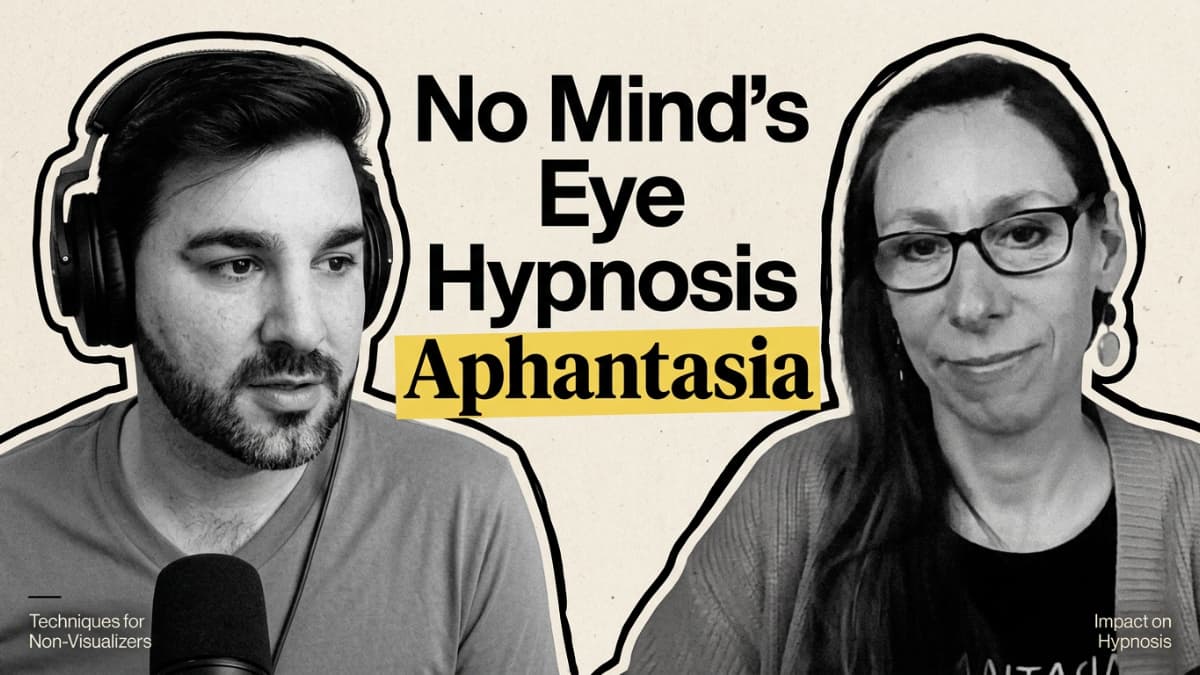
Most of us assume that to be a musician, you have to hear music in your head. New qualitative research from David Tolman challenges that — and reveals that the strategies musicians use with auditory aphantasia aren't broken workarounds, but a genuine way of reasoning musically.
When David Tolman was studying classical voice as an undergraduate, he failed exactly one class. It was called sight-singing and dictation. One half of it asked him to look at a piece of music and sing it correctly on the first try. The other half asked him to listen to a passage played on an old CD player and silently write down the notes.
He did well in music theory. He did well in his practical studio work. But that one class undid him, and for years he assumed the explanation was simple: he was just bad at it, the way some people are just bad at math.
It would be the better part of a decade before he understood what had actually been happening in that room. While he sat in silence struggling, some of his classmates were quietly replaying the passage in their heads — pressing a kind of internal rewind, holding the sound in mind, testing one interval against another until the answer clicked into place. David wasn't doing any of that. He couldn't. There was nothing there to replay.
David has auditory aphantasia — sometimes called anauralia. He has no mind's ear. And the central question of his research, which he came to share with Aphantasia Network founder Tom Ebeyer in this conversation, grew directly out of that experience: if you can't hear music internally, can you still think musically? Can you be a musician at all?
His answer, drawn from in-depth interviews with trained musicians who experience little to no auditory imagery, is one of the most quietly radical ideas in the imagery conversation right now. As he puts it: the absence of a mind's ear does not imply the absence of musical thought.
A Field Built on an Assumption
David's path into this work was indirect. As an undergraduate, he stumbled across the research of Dr. Tony Lambert during an English course, wrote a paper on it, graduated — and then found he couldn't let the question go. Without a formal research institution behind him, he kept reading and conducting small studies out of sheer interest, drawn repeatedly toward the extremes of imagery. One early favorite compared a musician with no auditory imagery at all to a musician with perfect pitch and intensely vivid auditory imagery — the two far ends of the same spectrum.
What surprised him most, early on, wasn't his own experience. It was the realization that the musicians around him had been doing something fundamentally different from him the entire time — and most of them had no idea, either. When he raised it, they were as fascinated as he was. They had never known that other people experience music differently than they do.
That mutual surprise points to something deeper. Music education, David argues, has "hear it in your head" baked deeply into how it gets taught — built by generations of well-intentioned teachers who simply didn't know auditory aphantasia existed. The pedagogy works beautifully for many musicians. By its very nature, it fails a small subset of others.
Tom has seen the same pattern across every domain the Network touches. "There is an assumption that in order to be successful in these fields, you need to be able to do that thing," he noted. To be an artist, you must be able to picture what you'll paint. To be a musician, you must be able to hear what you'll play. It's a tradition that runs all the way back to Aristotle, who wrote that the mind does not think without images — and assumed, as most people do, that everyone's mind worked like his own.
Four Strategies, Not Four Workarounds
David went into his study expecting to catalog compensatory strategies — the patchwork fixes musicians cobble together to make up for what they're missing. He came out of it believing something different. What he found wasn't compensation at all. It was a genuinely multimodal way of producing music and reasoning through it.
His paper identifies four recurring strategies among musicians without auditory imagery.
Kinesthetic scaffolding. Rather than preparing a note by hearing it internally, these musicians rely on bodily sensation — the exact shape the vocal cords make on a given pitch, the gesture that unlocks a darker or brighter vowel, the physical memory of where a note lives in the body. One classically trained singer described being able to land almost on a pitch early in learning a piece — microtonally off, in the space between two piano keys — until enough rote repetition made the placement automatic. Tom connected this to the animator Glenn Keane, who mimics facial expressions as he draws, using his body to reach the emotion he's trying to put on the page. The link between physical movement and creative output shows up across disciplines.
Visual and notational reliance. Some musicians lean heavily on the score itself. One participant who lacked auditory imagery but had strong visual imagery would picture the staff in her head even when performing from memory — not hearing the next note, but knowing where it is in space, reading the distance between notes the way you'd read a map. Strikingly, she had far fewer of the microtonal accuracy problems other participants described. She couldn't hear it, yet she was confident in a way the others weren't.
Linguistic-verbal mediation. This is the world of solfège — do, re, mi — and it's where classical training and aphantasia meet productively. Instead of having to simply know a pitch because it's a perfect fourth, these musicians anchor it to a syllable and to the vocal architecture that produces it. The label becomes the handle. Repetition ties the syllable to the body, and that pairing lets them move between pitches accurately and confidently, even with nothing playing in their head.
Reflective harmonic reasoning. The most analytical of the four. Here, harmonic expectation is generated theoretically rather than heard — by understanding key, progression, and structure, and by memorizing entire phrases or pieces as a predictive framework. These musicians spend more time up front analyzing a piece thematically — its chords, its key, where the music sits — building enough understanding to step into it with confidence. A musician who can hear internally might never need to spend that much time in analysis. For these players, the analysis is the music.
What unites all four is repetition and a deep, often conceptual relationship to musical structure. And what the variety reveals is just as important as the strategies themselves: even within the small group of musicians who experience little to no auditory imagery, the differences are dramatic. Some are classically trained opera and oratorio singers; others work in pop, R&B, and studio sessions. Some had over a decade of classical instruction; one had none. There is no single aphantasic musician. There's a spectrum inside the spectrum.
"I Don't Hear It, But I Know Where It Is"
One of the most intriguing threads in the conversation was the musician who could visualize the staff but not hear the music — and who navigated by the space between notes rather than their sound. She didn't experience the near-miss pitch errors the others did. She just knew where the note was.
It echoes a pattern long familiar in the visual imagery community. Some aphantasics will say there is simply no image — nothing there. Others will say the image is there, they just don't see it. David's findings suggest something similar may be happening in sound: a form of imagery operating below the level of conscious experience, guiding performance even when the musician reports hearing nothing at all. As some studies suggest, people who don't experience internal imagery may still be producing it — they just can't consciously interpret it.
This is also where David draws one of his sharpest distinctions, building on Tony Lambert's work: the difference between auditory imagery and inner speech. An earworm — that jingle you can't shake — isn't auditory imagery in the relevant sense. What distinguishes true auditory imagery is control: the ability to summon an interval or a phrase, start it over, replay it, and manipulate it at will. That capacity to silently simulate is what lets a musician with vivid imagery rehearse on a bus, get the reps in without making a sound, and walk into a difficult passage already familiar with it.
Tom drew the obvious parallel to sports psychology — athletes mentally rehearsing a free throw, running the play over and over without setting foot on the court. Musicians with auditory imagery can do the same with sound. Those without it need the physical instrument, the repetition, and the time. As David noted, the same gap appears in cognitive behavioral therapy, which leans heavily on visualization — another field where understanding different imagery profiles could change how the work gets done.
Mistaking a Common Strategy for a Necessary Mechanism
When Tom asked for the single most concrete change David would like to see in music education, his answer was less a pedagogical tweak than a reframe — and it's the line that lingers longest after the conversation ends.
"We have mistaken a common strategy for a necessary mechanism."
Hearing music internally, in other words, is one route to musicianship. The musicians David interviewed are genuinely accomplished — they got the solos, joined the cool groups, built real careers. Their success wasn't despite some defect. It came through a different, equally valid set of tools. The mistake the field has made isn't malicious or even surprising; it's the same mistake we all make, assuming the way we do something is the only way it can be done.
Tom called this idea beautifully said, and noted how far it travels beyond music. "People assume that because this is the way that we've done it — or this is a strategy that people use — it's the only strategy that works." It's the assumption underneath nearly every discouraging story the Network hears.
"You Never Want Self-Knowledge to Lead to Self-Limiting Belief"
There's a real risk in this kind of discovery, and Tom named it directly. David found out about his auditory aphantasia after he was already trained and succeeding. But a young musician who learns it at the very start — before they've built any confidence — might feel deflated, less-than, convinced that the strategies being taught simply won't work for them. They might quit.
"I can't tell you how many emails I've gotten from people who say, 'I can't be an artist now because I can't visualize,'" Tom said. "That to me is one of the worst outcomes. You never want self-knowledge to lead to self-limiting belief."
David's message to that young musician is steady and unequivocal: it can be done. There are more examples of people who've succeeded, and more resources for those who follow, than have ever existed before. Not having a mind's ear can feel like missing something — he admits the idea of vivid imagery sounds genuinely fun to him, the way Adam Zeman describes hyperphantasia. But wanting to experience it out of curiosity is not the same as being broken without it. It's a difference, not a deficit. And it's never too late.
A Young Field With Room to Get It Right
David is careful about the limits of his work. The study is qualitative and hypothesis-generating — three musicians, deep interviews, the beginning of an inquiry rather than the end of one. He's quick to say he didn't discover anything. What he did was synthesize: take a mature tradition of music pedagogy and a fast-growing understanding of imagery, and formally bring them together in one place. Now, he hopes, others will pick up the torch.
Future directions could include larger comparison groups spanning zero, average, slightly-above-average, and vivid imagery — and, most practically, a collaborative case study with a vocal professor and a student, testing which strategies actually work when an instructor knows what to look for. The goal isn't to throw out centuries of valuable teaching. It's to adapt it, and to build new strategies where the old ones don't fit.
That's the opportunity in a field this young. Aphantasia wasn't even named until 2015. The language we settle on, the questions we decide are worth asking, the assumptions we build into how music gets taught — these are being established right now, in real time. They don't have to calcify the way they have in older fields.
There's still a great deal to learn about how aphantasic minds make music. But David Tolman's work has already moved the conversation somewhere important: from can they? to how do they? — and that small shift in the question changes everything that follows.
Learn More
David Tolman is a musician and researcher based at Los Angeles City College, whose work sits at the intersection of music cognition and auditory imagery. His research focuses on the lived experience of trained musicians with little to no auditory imagery, using long-form qualitative interviews to understand how they reason about and produce music. He presented this work at the Mind's Ear and Inner Voice conference in Auckland, New Zealand. He has auditory aphantasia himself.
We host live conversations like this one every month — a chance to bring your questions directly to the researchers studying aphantasia and to connect with a global community of people who understand. Join us here.
When David Tolman was studying classical voice as an undergraduate, he failed exactly one class. It was called sight-singing and dictation. One half of it asked him to look at a piece of music and sing it correctly on the first try. The other half asked him to listen to a passage played on an old CD player and silently write down the notes.
He did well in music theory. He did well in his practical studio work. But that one class undid him, and for years he assumed the explanation was simple: he was just bad at it, the way some people are just bad at math.
It would be the better part of a decade before he understood what had actually been happening in that room. While he sat in silence struggling, some of his classmates were quietly replaying the passage in their heads — pressing a kind of internal rewind, holding the sound in mind, testing one interval against another until the answer clicked into place. David wasn't doing any of that. He couldn't. There was nothing there to replay.
You’ve used your five free reads
Members read everything here, and put their own questions to the researchers at live talks.
Every talk recorded, with the questions
The members’ Discord, between talks
The Aphantasia Explained course, with Annual
Prices in US dollars, plus tax where it applies. 30 days to change your mind.
Sources
2026
Musical Reasoning without a Mind’s Ear: A Comparative Case Study
Aphantasia Network is shaping a new, global conversation on the power of image-free thinking. We’re creating a place to discover and learn about aphantasia. Our mission is to help build a bridge between new scientific discoveries and our unique human experience — to uncover new insight into how we learn, create, dream, remember and more with blind imagination.
Was this helpful?
Image-Free Insights
A short note from our founder, Tom Ebeyer, every other week, plus occasional news and invitations to take part in studies. Change what you get from any email.