A Mind That Sees in Words: Meditating Without a Mind's Eye
What do you do when every guided meditation begins with “picture a beach” and nothing appears? Hal Warfield, who has hypophantasia, shares how he stopped trying to build images inside his head and began supplying them from outside. Pairing on-screen imagery, music, and short phrases, he created The Mind’s Ear, a YouTube channel for minds that see in words.
6 min read

When “Picture a Beach” Means Nothing
“Picture yourself resting comfortably on a serene beach.”
For many people, that sentence opens a door. They see blue water, pale sand, perhaps a palm tree bending in a breeze. For me, it was always a metaphor; just an idea, not anything anyone could actually see.
I know what a beach is. I grew up near Lake Michigan. I know all its moods: winter storm waves, a low, two-tone foghorn, perfectly flat calm on a summer day. I can describe the lake. I can think about it. I simply cannot call up a picture of it in my mind.
That difference matters when listening to a guided meditation that keeps asking me to see things that aren’t there.
Finding a Name for It
For years, I assumed everyone was like this. One of the most frustrating instructions was, “Picture a blank movie screen in your mind.” I would close my eyes and see nothing but the inside of my eyelids (or that interesting kaleidoscope of random colors and shapes that you “see” when your eyes are closed).
It was a “lightbulb moment” when I first read about aphantasia (obviously not a real lightbulb; I couldn’t imagine that). I was stunned. What I couldn’t do had a name! I read further that aphantasia had degrees: from being totally unable to see an image to being able to partially imagine. Mine fell into the second category, what some researchers call hypophantasia.
A Nonvisual Mind Is Not an Empty One
Aphantasia does not leave my mind empty. It leaves it nonvisual. There is more than one way to remember a place. There is more than one way to imagine one, too.
If you ask me to visualize an apple, several fractured and fragmented images will actually pop in for less than a second. I might see the Apple logo, then a bunch of apples at the grocery store, then an apple core, but they don’t become detailed, and they don’t last.
(As a personal aside, while I cannot see images, I can actually “hear” music when a song comes to mind. The lyrics, melodies, and overall song itself replay in my mind. Now I won’t be able to get “Feliz Navidad” out of my head for the rest of the day!)
Word-Pictures and Affirmations
While knowing was useful and even comforting to a degree, it didn’t help me when I did want to meditate. Early in my adult life, I did find that affirmations, repeated in thought, offered some degree of help. Repeated word-pictures actually had an impact and helped me change some things about my self-image over time.
These were the days when I was reading Napoleon Hill and David Schwartz and encountering affirmations that, not to belittle their ideas, often took the form of Emile Coue’s famous “Every day, in every way, I’m getting better and better.” My own variations of these did help me.
Imagination Is Not the Same as Visualization
This is especially important because the words imagination and visualization are often treated as if they mean the same thing. They do not. I have written stories, built fictional worlds, and spent much of my life creating things that did not exist before. None of that required an internal screen.
Meditation can work the same way.
Rather than long sentences, I find that “punchy,” short phrases - if you will, word-pictures - can do for me what visualization seems to do for others.
Supplying the Image Externally
That thought led me to experiment with a different approach. What if the image didn't have to come from inside?
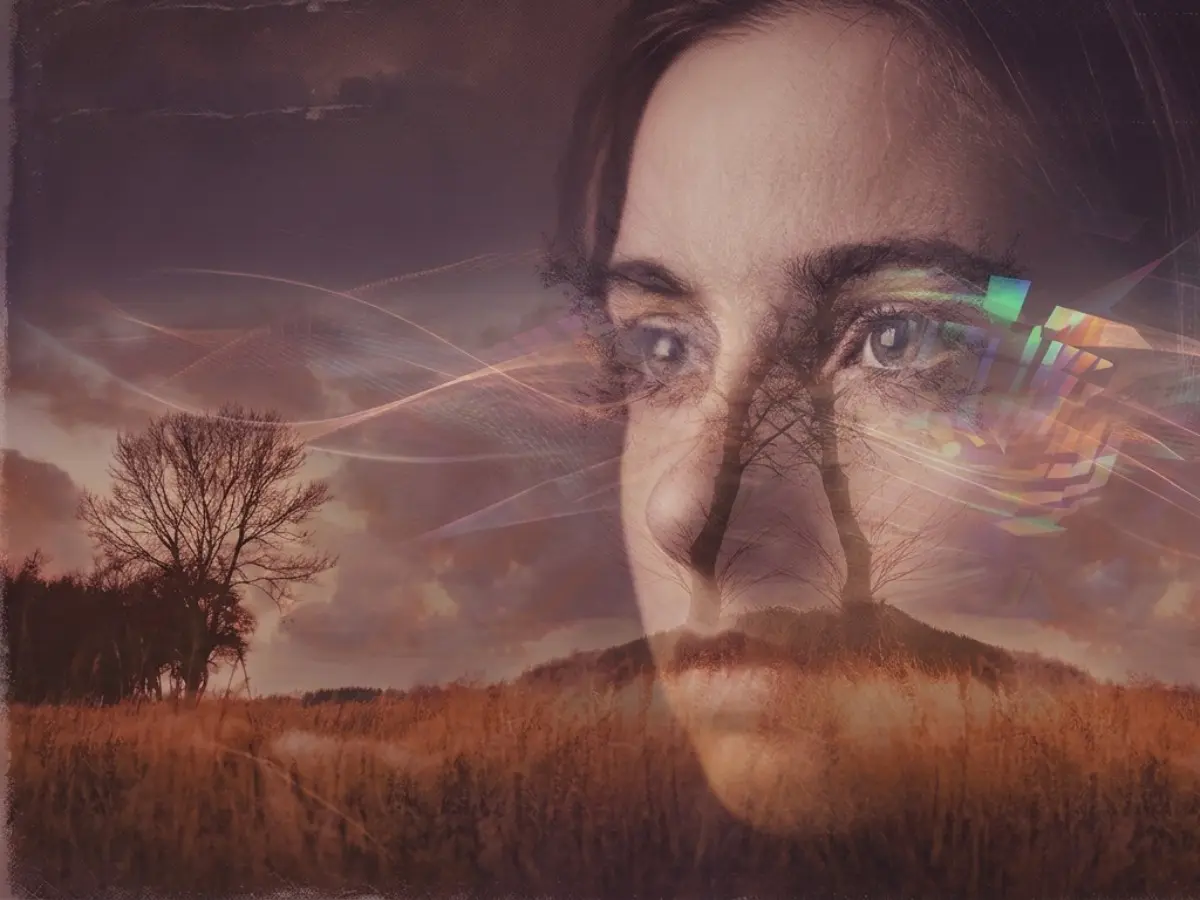
If I could not create a lasting picture internally, perhaps the image could be supplied externally. A lake, forest, castle, or night sky could establish a mood on the screen. Music could provide rhythm. Short phrases could introduce a thought.
The important word was short.
Long guided meditations often gave my mind too much time to wander. I would hear the first few sentences, begin thinking about something they reminded me of, and suddenly realize that the meditation had continued without me.
How The Mind’s Ear Began
A short phrase, combined with evocative images and music, worked differently. And that’s where The Mind’s Ear YouTube channel was born. The Mind’s Ear came from a simple thought: if the “mind’s eye” is not particularly useful to me, perhaps the mind’s ear could be.
I began creating actual songs with themes related to change, grief, joy, and simply added the wording as a slide background to the song so the words could be “seen” as the song played. And, in full disclosure, none of it would have been possible without AI image generation and AI music creation.
What Helps Me Settle
Over time, I noticed a few things that consistently help me settle into reflection:
Let the image live outside my head. A lake or a night sky on a screen sets the mood without asking me to rebuild it internally.
Keep the words short. A brief phrase gives my mind somewhere to land. A long sentence gives it somewhere to wander.
Give the words something to ride on. Music carries rhythm and feeling, and since songs replay in my mind, it reaches me in a way pictures never have.
Let the words come and go. Phrases that fade in and out leave room for my own thoughts in between.
Suggest, don't direct. The best phrases open a door rather than telling me what to find behind it.
These became the foundation of The Mind's Ear: short songs built around themes like change, grief, and joy, and longer videos for sleep or quieting an overstimulated mind.
Not Something to Be Cured
The Mind’s Ear grew from the hope that those words, joined with music and images, might help other people listen to their own minds in whatever way works for them.
Traditional visualization is clearly powerful for people who can do it. The problem comes when it is presented as the only road into meditation - or when those of us who cannot follow it assume there must be something wrong with us.
I personally do not think of aphantasia as something to be cured. My mind has worked this way for as long as I can remember. Learning its name did not change it, but it did change how I understood it.
More importantly, it released me from thinking something was wrong with me.
Space for Different Minds
That may be the most useful lesson in all of this. If a guided meditation asks a person to picture something and nothing appears, that absence does not mean the mind is empty, uncreative, or incapable of reflection. It may mean that the mind responds to something else.
For me, that “something else” is often the combination of an external image, music, and a few carefully chosen words. Those elements do not dictate where my thoughts must go. They give my thoughts somewhere from which to begin.
The purpose is not to produce an impressive movie inside the head. Nor is it to hand everyone the same answer.
It is to create a little space in which different minds can find different meanings.
Mine sees in words.
Explore The Mind's Ear
The Mind's Ear is a YouTube channel by Hal Warfield offering meditations designed for minds that don't rely on visualization. Each video pairs on-screen images, music, and short phrases, with no need to picture anything internally. Choose from short songs on themes like change, grief, and joy, or longer pieces for sleep and quieting an overstimulated mind.
Topics
Written by
- HWHAL WARFIELD
Hal Warfield is a writer and the creator of The Mind’s Ear, a YouTube channel combining imagery, music, and word-pictures for people who may not experience mental imagery in the usual way.
Was this helpful?
Image-Free Insights
A short note from our founder, Tom Ebeyer, every other week, plus occasional news and invitations to take part in studies. Change what you get from any email.