Hypnopompia: Between Sleep and Awake Where Someone with Aphantasia May “See” Imagery
On rare occasions in the morning, between sleep and awake, when the images from my dreams float behind my eyes, that’s when I revel in what it must be like to “see” imagery.
On those rare occasions in the morning, between sleep and awake, when the images from my dreams float behind my eyes—known as hypnopompia—that’s when I revel in what it must be like to “see” imagery.
My imagination is blind, meaning I can’t visualize. This neurodiversity is called aphantasia, and I was born with it. When I close my eyes and try to imagine something—an animal, a landscape, a person—all I see is black and grey and sometimes lava-lamp-like splotches of light purple and white. That’s the extent of my visual imagery.
Hypnopompia and Hypnagogia
I recently tweeted about this experience and was surprised to learn that this in-between sleep and awake state had a name: hypnopompia. In contrast, there is hypnagogia which is the state between awake and sleep.
The hypnopompic state (or hypnopompia) is the state of consciousness leading out of sleep, a term coined by the psychical researcher Frederic Myers. Its mirror is the hypnagogic state at sleep onset
Wikipedia
Upon doing a little bit of research, I learned that what I am actually experiencing is called hypnopompic hallucinations. What? I’m hallucinating?
Hypnopompic hallucinations are hallucinations that occur in the morning as you’re waking up . . . For most people, hypnopompic hallucinations are considered normal and are not cause for concern.
Jay Summer (“What Are Hypnopompic Hallucinations?”)
Needless to say, I was relieved to read that: “not cause for concern.” Still, way to burst my bubble, internet.
What Having Aphantasia Is Like
Having a blind imagination has never stopped me from achieving. For instance:
I got good grades in school. However, math and science were definitely not my strong suit. Arts and literary courses were my bag.
In my past corporate lives, I was a computer programmer, a support analyst, a project manager, a website developer, and a communications consultant.
I’m highly organized.
I read a lot of fiction, which astounds some people who learn I have aphantasia: “How can you follow the story if you can’t imagine the story as it unfolds?” The answer? I follow the story just fine. But I skim over long descriptions of people, places, and things, and concentrate on dialog, relationships, feelings, etc.
I wrote a mystery novel which, again, begged the question—”But how?” Simply put, the story unfolded as my mind played it out. I know what a car chase looks and sounds like, for instance. I can write about it without visualizing how it looks. It’s the difference between seeing it in your imagination and perceiving it.
Recently, I wrote a children’s book about aphantasia.
I do pottery.
Having aphantasia doesn’t preclude me from being smart or creative. But having aphantasia is frustrating sometimes.
I would appreciate a stronger ability to work with numbers and multidimensional concepts.
My sense of direction sucks. Thankfully, there’s GPS.
I wish the memory of my favorite places and events were accompanied by vivid mental images that I could relive at will. Photos and video help a lot in this regard.
and would be a lot easier. For some, it’s impossible.
I would love to be able to close my eyes and picture the faces of my kids and grandkids on demand.
Where Aphantasia and Hypnopompia Cross Paths
Would I “cure” my blind imagination if I had the chance? First of all, aphantasia is not an illness or disease that demands a cure. But, if there was an opportunity to achieve vivid imagery, like many aphantasics, my response is: only if I could turn it on and off. The thought of having sudden, permanent imagery is overwhelming.
Until then, I will bask in the hypnopompic hallucinations that allow me to see images of my sweet mother, who passed in 2016… if only for a few brief, magical moments.
Explore more of Liana’s personal experiences on her blog, LianaMScott.com.
On those rare occasions in the morning, between sleep and awake, when the images from my dreams float behind my eyes—known as hypnopompia—that’s when I revel in what it must be like to “see” imagery.
My imagination is blind, meaning I can’t visualize. This neurodiversity is called aphantasia
You’ve used your five free reads
Members read everything here, and put their own questions to the researchers at live talks.
Every talk recorded, with the questions
The members’ Discord, between talks
The Aphantasia Explained course, with Annual
Prices in US dollars, plus tax where it applies. 30 days to change your mind.
Liana is a semi-retired writer and amateur potter. Despite her lifelong inability to visualize - or perhaps because of it - Liana has learned to adapt, bending her capabilities in imaginative ways to service her creativity. As a storyteller with aphantasia, Liana imagines our wondrous world through the lenses of perception, memory, and feeling, seeking to write passionate, sometimes humorous, tales full of possibilities.
Was this helpful?
Image-Free Insights
A short note from our founder, Tom Ebeyer, every other week, plus occasional news and invitations to take part in studies. Change what you get from any email.
A Mind That Sees in Words: Meditating Without a Mind's Eye
What do you do when every guided meditation begins with “picture a beach” and nothing appears? Hal Warfield, who has hypophantasia, shares how he stopped trying to build images inside his head and began supplying them from outside. Pairing on-screen imagery, music, and short phrases, he created The Mind’s Ear, a YouTube channel for minds that see in words.
HAL WARFIELD · November 2026
The Girl Who Cannot Picture It
What happens when a horror writer creates a character who cannot form mental images? Author Len J. MacDonald shares how a chance encounter with aphantasia inspired Khloe Patterson, a teenage girl whose different way of experiencing the world became an integral part of his horror novel.
Len MacDonald · October 2026
Adding and Subtracting with My Blind Third Eye
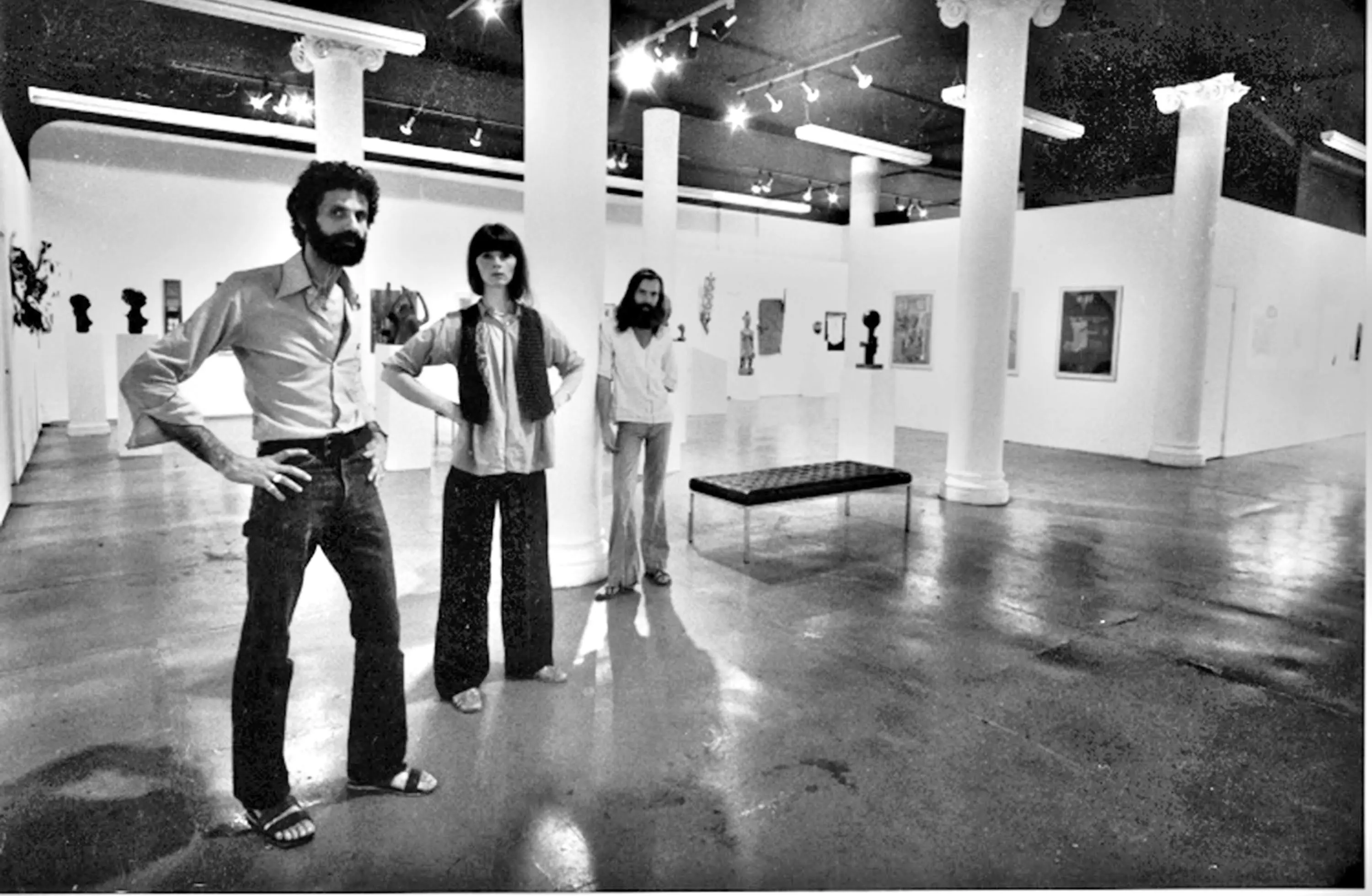
At 85, an artist and curator discovers aphantasia and finally understands decades of struggle with art school instruction, finding that a tactile "add and subtract" method, first in assemblage, then photography and curating, was the workaround that quietly shaped an entire career.