Multisensory Aphantasia
Multisensory aphantasia means missing imagery in two or more senses at once, not just vision. It affects roughly a quarter of people with visual aphantasia.

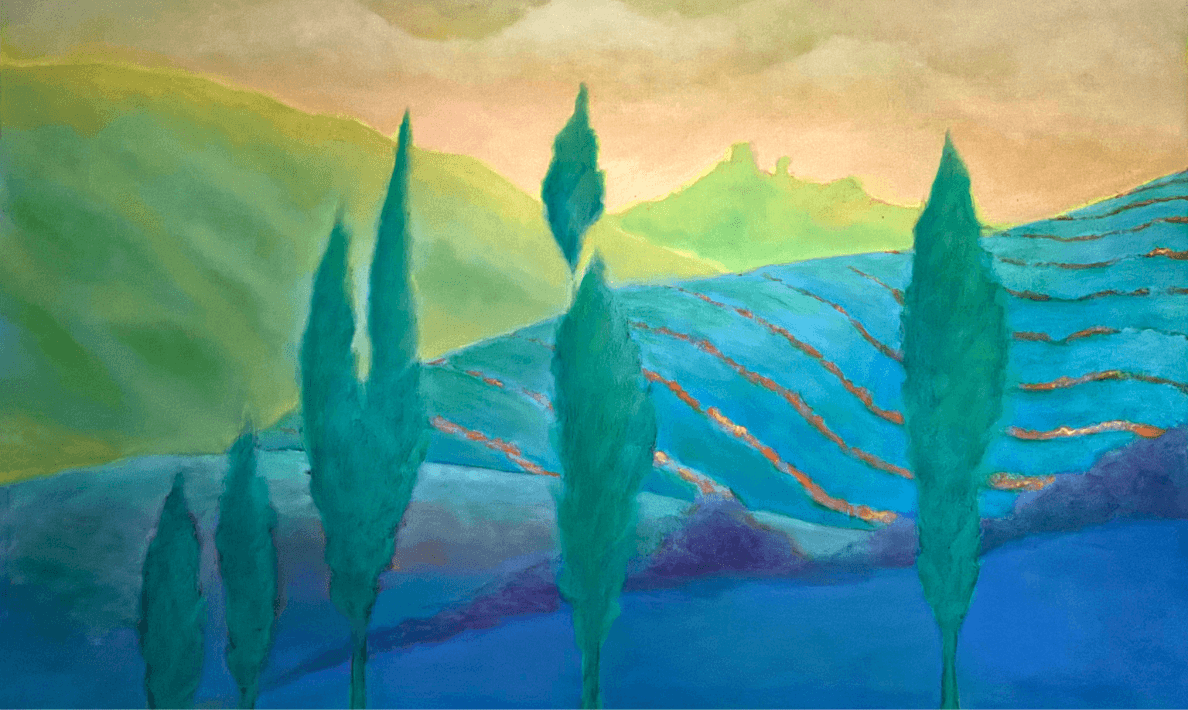
An artist shares his surprising discovery of living with aphantasia—the inability to visualise. Despite being unable to picture faces or landscapes, he reveals how this unique trait shapes his creative journey, forcing him to work instinctively, embrace experimentation, and use photography, digital tools, and video to help translate emotion into art.

Haiku is often called a visual snapshot, but as a poet with aphantasia, I see nothing in my mind's eye. For forty years, I thought "picturing it" was a metaphor. From childhood memory tricks to professional poetry, I’ve learned that a mind without images doesn't lack imagination—it just meets the world through a direct and powerful connection between attention, relationship, and the timing of perception.
Higher sensory imagery ability is associated with increased emotional valence, arousal, and aesthetic appeal when viewing paintings. This suggests that mental imagery capacity significantly enhances the richness of aesthetic experiences.
Chen, Z., Han, Z., Wu, L., & Huang, J. (2026). Multisensory imagery enhances the aesthetic evaluation of paintings: a virtual reality study. Empirical Studies of the Arts. doi:10.1177/02762374251412761

Hollis Robbins reveals how Mississippi's reading revolution validates what people with aphantasia have always known: you don't need mental pictures to decode language. This essay argues that teaching reading as pure pattern-matching and code-breaking—not visualization—prepares all students for an AI-saturated world.
A decade of research shows aphantasia is a heterogeneous condition with varying subtypes and preserved cognitive performance. This suggests that conscious visual imagery is not required for complex tasks like memory and spatial reasoning.
Zeman, A. (2025). A decade of aphantasia research – and still going!. Neuropsychologia, 219, 109278. doi:10.1016/j.neuropsychologia.2025.109278
Researchers found that aphantasia prevalence and multisensory imagery strength vary significantly across different cultural groups. This suggests that cultural and environmental factors may play a key role in shaping individual differences in mental imagery.
Bruder, J., & Zehra, M. (2025). Aphantasia, hyperphantasia and sensory imagery in a multi-cultural sample. Journal of Cultural Cognitive Science, 9(3), 465–481. doi:10.1007/s41809-025-00184-8

What was your reaction when you first discovered others were thinking in pictures while you weren't? This jarring revelation led designer Shane Williams on a 25-year journey exploring cognitive differences. His research shows that studying and embracing how differently we all think opens up new worlds of patience, understanding, and acceptance.

I live without mental imagery—no pictures, no imagined sounds. But my world is rich in emotion, intuition, and presence. I parent, create, and heal by tuning into what I feel, not what I see. It’s a different way of experiencing life—and it’s deeply meaningful in its own quiet, grounded way.

For years, I thought something was wrong with me. While others “pictured” scenes in their minds, I saw nothing. I couldn’t visualize characters or settings, and it left me feeling disconnected—until I learned I had aphantasia.
Researchers define aphantasia as the absence of voluntary sensory imagery, often extending beyond vision to other modalities. This formal definition establishes a standardized framework for classifying multisensory and global imagery deficits.
Zeman, A., Monzel, M., Pearson, J., Scholz, C. O., & Simner, J. (2025). Definition: aphantasia. Cortex, 182, 212–213. doi:10.1016/j.cortex.2024.07.019

People with aphantasia may struggle with memory recall. This may be because our memories are image-free. But, just because we can't see our memories, does that mean we don't have them? The ability to visualize is not a prerequisite for remembering rich experiences.
Our course turns your VVIQ result into a profile of your own mind, the words to explain it to the people in your life, and the evidence to hand anyone who says you are not trying. The first two modules are free.