Theory & Definitions
The conceptual groundwork: what aphantasia actually is, how it's been defined, and where those definitions still get debated.
Aphantasic individuals showed eye movement patterns similar to visualizers when exploring mental maps despite reporting no subjective imagery. This suggests aphantasia may reflect reduced metacognitive access to imagery rather than a total absence of representational content.
Takamura, Y., Coustaty, S., Liu, J., Razzak, E., Pouget, P., Spagna, A., & Bartolomeo, P. (2026). Similar eye movements in aphantasia and visualizers during mental map exploration. Cortex, 203, 48–73. doi:10.1016/j.cortex.2026.06.010
Participants with aphantasia reported significantly higher ability to generate kinaesthetic imagery compared to visual imagery, especially when primed by physical action. This suggests kinaesthetic imagery can function independently of visual imagery.
Wright, D. J., Scott, M. W., Esselaar, M., Braithwaite, E. C., & Holmes, P. S. (2026). Motor imagery abilities in individuals who experience aphantasia. Neuropsychologia, 230, 109530. doi:10.1016/j.neuropsychologia.2026.109530
Aphantasic individuals showed a greater accuracy drop than controls when backward masking disrupted visual pattern completion. This suggests that aphantasia involves weakened recurrent neural processing that affects both imagery and perception.
Loo, C., & Buchsbaum, B. R. (2026). Fragile recurrent processing in aphantasia: evidence from visual pattern completion. Consciousness and Cognition, 143, 104100. doi:10.1016/j.concog.2026.104100
Aphantasia reveals that abstract thought does not require the capacity to manipulate mental images. This suggests that higher-level cognition can function independently of imagistic processes.
Tooming, U., & Jakapi, R. (2026). Aphantasia as a challenge for humean abstraction. Neuropsychologia, 227, 109465. doi:10.1016/j.neuropsychologia.2026.109465
Aphantasics showed normal visual working memory performance and decodable neural representations in the visual cortex. This suggests aphantasia is a lack of conscious awareness rather than an inability to generate or store visual information.
Knight, K. F., Milton, F., & Zeman, A. (2026). Aphantasia and visual working memory: no direct evidence of impaired visual working memory in aphantasics, either in behavioral performance or the accuracy of a multivoxel pattern classifier. Neuropsychologia, 226, 109430. doi:10.1016/j.neuropsychologia.2026.109430
Congenital aphantasia likely stems from impaired access to intact visual representations rather than a total lack of mental content. This suggests conscious visualization is an emergent property of large-scale network coordination.
Bartolomeo, P. (2026). Aphantasia and the mechanisms of visual mental imagery. Annual Review of Vision Science. doi:10.1146/annurev-vision-110425-105103
People with aphantasia responded faster than controls on language tasks, with neither group showing expected switching costs. This suggests that mental imagery is not required for language comprehension and may even slow processing.
Moskoff, T. (2026). Utilizing aphantasia to examine embodied cognition in the visual modality. University of Colorado Honors Journal. doi:10.33011/cuhj20264961
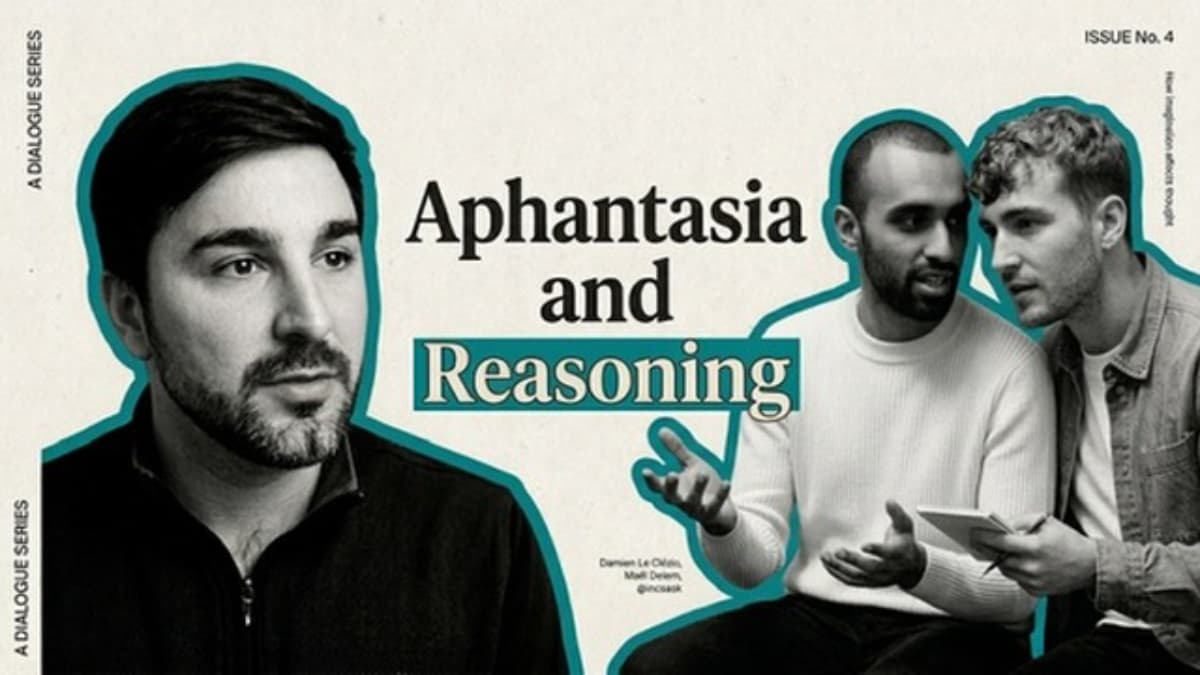
Aphantasics did not show a visual impedance effect during reasoning, unlike typical imagers who were slowed by irrelevant visual details. This suggests that mental imagery can sometimes hinder cognitive performance by creating interference.
Le Clézio, D., Delem, M., Monzel, M., & Plancher, G. (2026). The impact of mental images on reasoning: a study on aphantasia. Neuropsychologia, 224, 109376. doi:10.1016/j.neuropsychologia.2026.109376
Aphantasia is a multifaceted condition that can impair visual reconstruction while sparing propositional memory and social functions. This invites cognitive science to embrace individual variability to refine models of the human mind.
Cavalli, E., & Plancher, G. (2026). Introduction to the special issue on aphantasia. L’Année psychologique, Vol. 126(1), 7–8. doi:10.3917/anpsy1.261.0007
People with aphantasia showed a match effect for object color during sentence comprehension, indicating they engage in unconscious mental simulation. This suggests that conscious imagery and involuntary simulation are separate cognitive processes.
Speed, L. J., Mak, M., & McRae, K. (2026). Investigating mental simulation during sentence comprehension in aphantasia. Neuropsychologia, 109443. doi:10.1016/j.neuropsychologia.2026.109443
Researchers argue that congenital aphantasia is not "imagery blindsight" because individuals retain high-level accuracy and conscious access to information via non-visual routes. This suggests aphantasia involves a selective inability to format information into a quasi-visual experience.
Bartolomeo, P., & Arcangeli, M. (2026). Congenital aphantasia is not imagery blindsight. Cortex, 197, 112–114. doi:10.1016/j.cortex.2026.02.009
Aphantasics show significant behavioral and physiological differences from controls, including a lack of binocular rivalry priming and pupillary adjustments. These findings suggest aphantasia stems from an objective absence of sensory representations rather than a mere failure of introspection.
Lorenzatti, J. J. (2026). What is aphantasia? a conceptual articulation and empirical evaluation. Neuropsychologia, 109431. doi:10.1016/j.neuropsychologia.2026.109431
People with aphantasia were more accurate but slower than controls on multimodal mental comparison tasks. This suggests that sensory cognition can be successfully achieved through propositional rather than imagistic strategies.
Suggate, S. P., Milton, F., & Tree, J. (2026). Multimodal mental comparisons in those with and without aphantasia. Neuropsychologia, 222, 109373. doi:10.1016/j.neuropsychologia.2026.109373

In Part 2 of her review, Hollis Robbins explores what Zeman's book means for those who imagine without images. Drawing on her own experiences with chess, psychedelics, and poetry, she argues that aphantasia is not a deficit but a different cognitive architecture—one that models the world through language. She then turns to presidential rhetoric to ask a provocative question: did Ronald Reagan have aphantasia? And what does it mean when the rhetorical patterns of 'the great communicator' look strikingly like those of an LLM?
Aphantasia is characterized by a deficit in top-down modulation where impaired attentional amplification fails to bring integrated visual representations into conscious awareness. This suggests that the condition stems from a functional disconnection between fronto-parietal networks and the visual cortex.
Liu, J. (2026). A neural model of conscious mental imagery and aphantasia. Neuropsychologia, 109392. doi:10.1016/j.neuropsychologia.2026.109392
Aphantasic individuals showed eye movement patterns similar to visualizers when exploring mental maps despite reporting no subjective imagery. This suggests aphantasia may reflect reduced metacognitive access to imagery rather than a total absence of representational content.
Takamura, Y., Coustaty, S., Liu, J., Razzak, E., Pouget, P., Spagna, A., & Bartolomeo, P. (2026). Similar eye movements in aphantasia and visualizers during mental map exploration. Cortex, 203, 48–73. doi:10.1016/j.cortex.2026.06.010
Participants with aphantasia reported significantly higher ability to generate kinaesthetic imagery compared to visual imagery, especially when primed by physical action. This suggests kinaesthetic imagery can function independently of visual imagery.
Wright, D. J., Scott, M. W., Esselaar, M., Braithwaite, E. C., & Holmes, P. S. (2026). Motor imagery abilities in individuals who experience aphantasia. Neuropsychologia, 230, 109530. doi:10.1016/j.neuropsychologia.2026.109530
Aphantasic individuals showed a greater accuracy drop than controls when backward masking disrupted visual pattern completion. This suggests that aphantasia involves weakened recurrent neural processing that affects both imagery and perception.
Loo, C., & Buchsbaum, B. R. (2026). Fragile recurrent processing in aphantasia: evidence from visual pattern completion. Consciousness and Cognition, 143, 104100. doi:10.1016/j.concog.2026.104100
Aphantasia reveals that abstract thought does not require the capacity to manipulate mental images. This suggests that higher-level cognition can function independently of imagistic processes.
Tooming, U., & Jakapi, R. (2026). Aphantasia as a challenge for humean abstraction. Neuropsychologia, 227, 109465. doi:10.1016/j.neuropsychologia.2026.109465
Aphantasics showed normal visual working memory performance and decodable neural representations in the visual cortex. This suggests aphantasia is a lack of conscious awareness rather than an inability to generate or store visual information.
Knight, K. F., Milton, F., & Zeman, A. (2026). Aphantasia and visual working memory: no direct evidence of impaired visual working memory in aphantasics, either in behavioral performance or the accuracy of a multivoxel pattern classifier. Neuropsychologia, 226, 109430. doi:10.1016/j.neuropsychologia.2026.109430
Congenital aphantasia likely stems from impaired access to intact visual representations rather than a total lack of mental content. This suggests conscious visualization is an emergent property of large-scale network coordination.
Bartolomeo, P. (2026). Aphantasia and the mechanisms of visual mental imagery. Annual Review of Vision Science. doi:10.1146/annurev-vision-110425-105103
People with aphantasia responded faster than controls on language tasks, with neither group showing expected switching costs. This suggests that mental imagery is not required for language comprehension and may even slow processing.
Moskoff, T. (2026). Utilizing aphantasia to examine embodied cognition in the visual modality. University of Colorado Honors Journal. doi:10.33011/cuhj20264961
Aphantasics did not show a visual impedance effect during reasoning, unlike typical imagers who were slowed by irrelevant visual details. This suggests that mental imagery can sometimes hinder cognitive performance by creating interference.
Le Clézio, D., Delem, M., Monzel, M., & Plancher, G. (2026). The impact of mental images on reasoning: a study on aphantasia. Neuropsychologia, 224, 109376. doi:10.1016/j.neuropsychologia.2026.109376
Aphantasia is a multifaceted condition that can impair visual reconstruction while sparing propositional memory and social functions. This invites cognitive science to embrace individual variability to refine models of the human mind.
Cavalli, E., & Plancher, G. (2026). Introduction to the special issue on aphantasia. L’Année psychologique, Vol. 126(1), 7–8. doi:10.3917/anpsy1.261.0007
People with aphantasia showed a match effect for object color during sentence comprehension, indicating they engage in unconscious mental simulation. This suggests that conscious imagery and involuntary simulation are separate cognitive processes.
Speed, L. J., Mak, M., & McRae, K. (2026). Investigating mental simulation during sentence comprehension in aphantasia. Neuropsychologia, 109443. doi:10.1016/j.neuropsychologia.2026.109443
Researchers argue that congenital aphantasia is not "imagery blindsight" because individuals retain high-level accuracy and conscious access to information via non-visual routes. This suggests aphantasia involves a selective inability to format information into a quasi-visual experience.
Bartolomeo, P., & Arcangeli, M. (2026). Congenital aphantasia is not imagery blindsight. Cortex, 197, 112–114. doi:10.1016/j.cortex.2026.02.009
Aphantasics show significant behavioral and physiological differences from controls, including a lack of binocular rivalry priming and pupillary adjustments. These findings suggest aphantasia stems from an objective absence of sensory representations rather than a mere failure of introspection.
Lorenzatti, J. J. (2026). What is aphantasia? a conceptual articulation and empirical evaluation. Neuropsychologia, 109431. doi:10.1016/j.neuropsychologia.2026.109431
People with aphantasia were more accurate but slower than controls on multimodal mental comparison tasks. This suggests that sensory cognition can be successfully achieved through propositional rather than imagistic strategies.
Suggate, S. P., Milton, F., & Tree, J. (2026). Multimodal mental comparisons in those with and without aphantasia. Neuropsychologia, 222, 109373. doi:10.1016/j.neuropsychologia.2026.109373

In Part 2 of her review, Hollis Robbins explores what Zeman's book means for those who imagine without images. Drawing on her own experiences with chess, psychedelics, and poetry, she argues that aphantasia is not a deficit but a different cognitive architecture—one that models the world through language. She then turns to presidential rhetoric to ask a provocative question: did Ronald Reagan have aphantasia? And what does it mean when the rhetorical patterns of 'the great communicator' look strikingly like those of an LLM?
Aphantasia is characterized by a deficit in top-down modulation where impaired attentional amplification fails to bring integrated visual representations into conscious awareness. This suggests that the condition stems from a functional disconnection between fronto-parietal networks and the visual cortex.
Liu, J. (2026). A neural model of conscious mental imagery and aphantasia. Neuropsychologia, 109392. doi:10.1016/j.neuropsychologia.2026.109392
Everything you wish someone had told you about having aphantasia. Understand why you think differently, find your strengths, and learn the strategies built for your brain — not someone else's.
Talk to counselors, coaches, and educators who already understand aphantasia — so you don't have to start by explaining what it is.
Everything you wish someone had told you about having aphantasia. Understand why you think differently, find your strengths, and learn the strategies built for your brain — not someone else's.
Talk to counselors, coaches, and educators who already understand aphantasia — so you don't have to start by explaining what it is.